
History of Wall Street
A five-stop tour through Wall Street's financial history
Financial Mathematics Walking Tour
By Sophia DeGregorio
I set out to walk this route after realizing how rich a history our city has - and how much you can learn just by walking around it. Touring the Financial District, I was struck by how many plaques, carvings, and landmarked buildings sit just blocks from Wall Street's best-known stops, each one marking a different chapter in how financial mathematics built - and sometimes broke - trust in the American market.
Why this tour is a Her Funds story
Walking this tour also means walking past a history built almost entirely by men. Hamilton wrote the Bank of New York's constitution, the twenty-four brokers under the buttonwood tree were all men, and every name tied to LTCM and Lehman Brothers' leadership was male. It wasn't until December 28, 1967 that Muriel Siebert became the first woman to buy a seat on the New York Stock Exchange - the only woman among 1,365 men, a distinction she held alone for the next decade. Today, women still make up only 19% of C-suite roles in financial services, despite entering the industry at parity with men.
That gap is exactly why Her Funds exists: to put girls in rooms like the NYSE trading floor and the Federal Reserve before they're old enough to be told those rooms aren't for them.
Financial mathematics has shaped New York City's financial history by helping institutions transform uncertainty into systems of credit, pricing, risk management, and market coordination. This tour traces that history through five sites, from early banking and securities trading to modern quantitative models, derivatives, hedge funds, and financial crises. The central takeaway: financial mathematics is powerful, but not self-correcting - it can organize markets and measure risk only when institutions use it responsibly, questioning its assumptions and recognizing its limits.
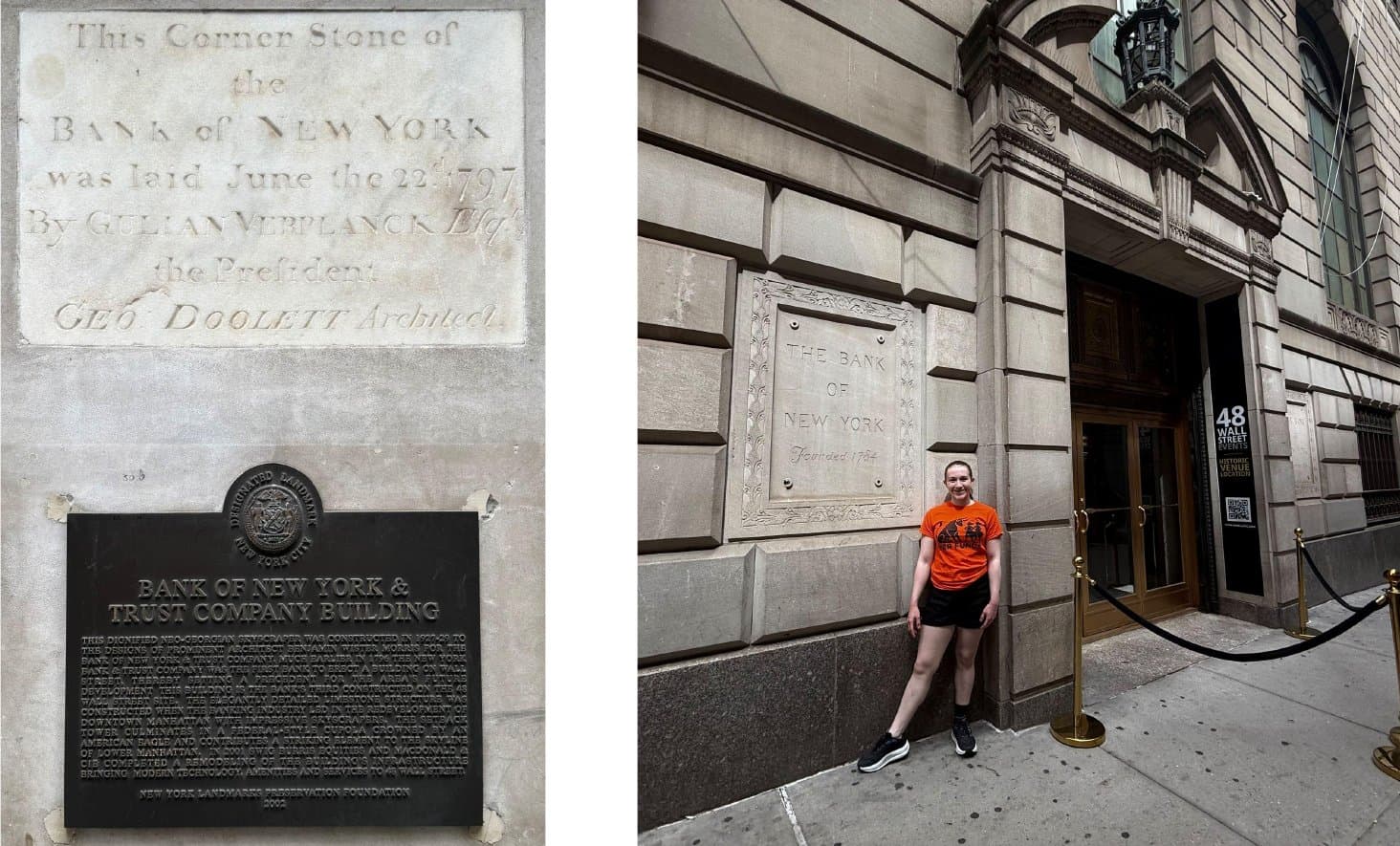
The Bank of New York (established 1784)
Established by merchants and civic leaders just months after New York returned to American control, the Bank of New York helped turn abstract promises of repayment into organized financial practice through credit, loans, and banking policy. Alexander Hamilton wrote the bank's constitution, and in 1789 it became the first financial institution to loan to the new national government - an early foundation for financial mathematics built on centralized credit and a stable currency.
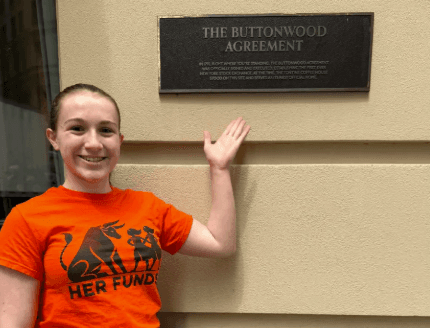
The Buttonwood Agreement (1792)
The agreement emerged after the Panic of 1792, the new nation's first financial panic, when speculator William Duer defaulted and panic selling sent securities prices falling. In May 1792, twenty-four brokers met under a buttonwood tree on Wall Street and agreed to trade only with each other and charge clients commissions of no less than 0.25% per transaction - the beginning of the first New York Stock Exchange.
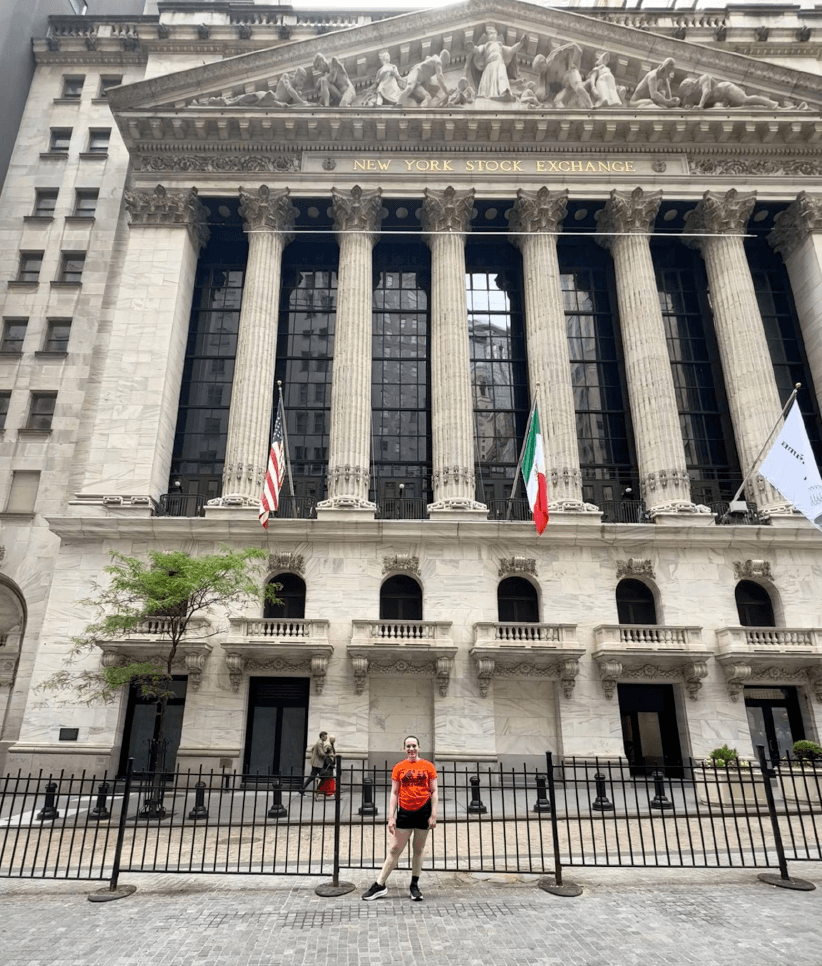
The New York Stock Exchange (completed 1903)
Formally constituted in 1817 as the New York Stock and Exchange Board, the Exchange grew alongside the securities market - listed stocks rose from 28 in 1820 to 112 in 1840, with trading prices recorded and published in newspapers. By 1860 it was the largest securities exchange in the country, signifying a major shift in financial mathematics: standardizing and publishing markets to make them more measurable and transparent.
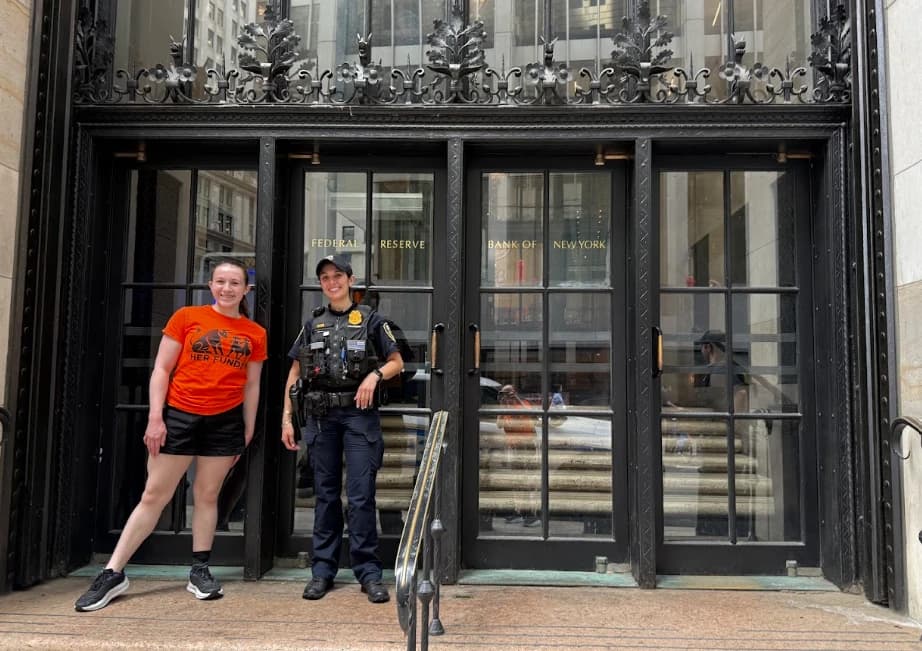
The Federal Reserve Bank of New York & the 1998 LTCM rescue
The New York Fed opened in 1914 and became one of the largest Reserve Banks in the Federal Reserve System. Its role became critical in 1998, when Long-Term Capital Management - a hedge fund whose convergence-trading strategy relied on sophisticated models - saw its assumed price relationships break down after Russia defaulted, revealing that risks it believed were diversified were actually connected under crisis conditions. The New York Fed coordinated a private $3.6 billion rescue without lending its own funds, a turning point showing that models can create profit and trust but still require stronger oversight.
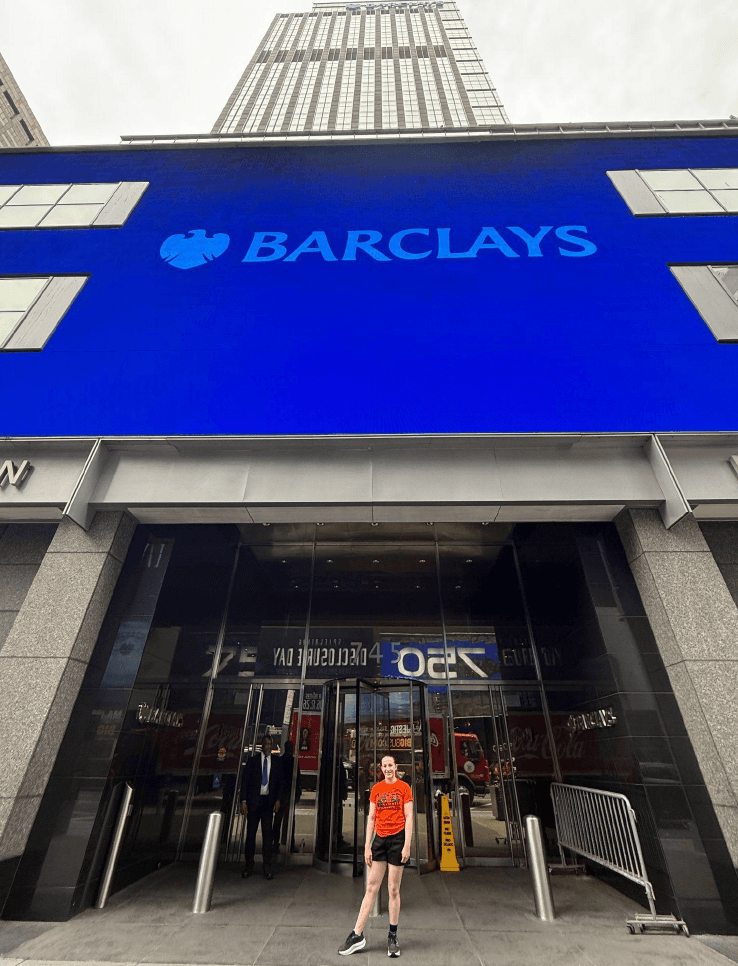
The Former Lehman Brothers Building & the 2007-2008 crisis
By the 2000s, quantitative analysts combined formulas with powerful computers to calculate derivative risk, making strategies appear controlled and nearly risk-free. The 2007 "Quant Quake" exposed the fragility of that confidence when models built on the assumption that housing prices would not broadly decline collided with a surge of subprime defaults, forcing similarly positioned funds into a cycle of shared losses. A year later, Lehman Brothers collapsed and the shadow banking system froze, fueling the Great Recession - a failure not just of mathematical modeling, but of institutions recognizing when their assumptions no longer applied. As physicist James Owen Weatherall puts it, "the danger comes when we use ideas from physics, but we stop thinking like physicists."
Standing at the Buttonwood Agreement site made an event from 1792 feel less abstract - not just reading about the origins of the New York Stock Exchange, but standing in the very place that history began. Together, the five stops reveal a clear pattern: financial mathematics helped build public trust through credit, banking, securities trading, and published prices, but the same models that created confidence also created new risk once markets grew more complex. Whether in the early republic or the Great Recession, financial history is not only about money, but also human behavior, government power, public confidence, and institutional responsibility.
Sources
- Gale Harris, "(Former) Bank of New York & Trust Company Building," Landmarks Preservation Commission, 1998 - s-media.nyc.gov
- Stuart Banner, "The Origin of the New York Stock Exchange, 1791-1860," The Journal of Legal Studies 27, no. 1 (1998) - doi.org/10.1086/468015
- James Narron and David Skeie, "Crisis Chronicles: Central Bank Crisis Management during Wall Street's First Crash (1792)," Federal Reserve Bank of New York, 2014 - libertystreeteconomics.newyorkfed.org
- "The History of NYSE," New York Stock Exchange - nyse.com/history-of-nyse
- "New York Stock Exchange," National Park Service, 2022 - nps.gov
- Federal Reserve Bank of New York, "Federal Reserve Bank of New York," Federal Reserve History, 2021 - federalreservehistory.org
- "About the New York Fed," Federal Reserve Bank of New York - newyorkfed.org
- Michael Fleming and Weiling Liu, "Near Failure of Long-Term Capital Management," Federal Reserve History, 1998 - federalreservehistory.org
- James Owen Weatherall, The Physics of Wall Street: A Brief History of Predicting the Unpredictable (Houghton Mifflin Harcourt, 2013)
- "Seat on the New York Stock Exchange, 1967," Harvard Business School Library, Muriel Siebert Collection - library.hbs.edu
- "Closing the gap: Leadership perspectives on promoting women in financial services," McKinsey & Company - mckinsey.com